Ładowanie mapy…
Sas-kői-kisbarlang
Sas-kői-kisbarlang is a small cave tucked into the base of a rock wall in the Visegrád Hills, just a short walk from the better-known Sas-kövi-barlang. It's a quiet, off-the-beaten-path spot for hikers curious about the volcanic geology hidden throughout this part of Hungary.
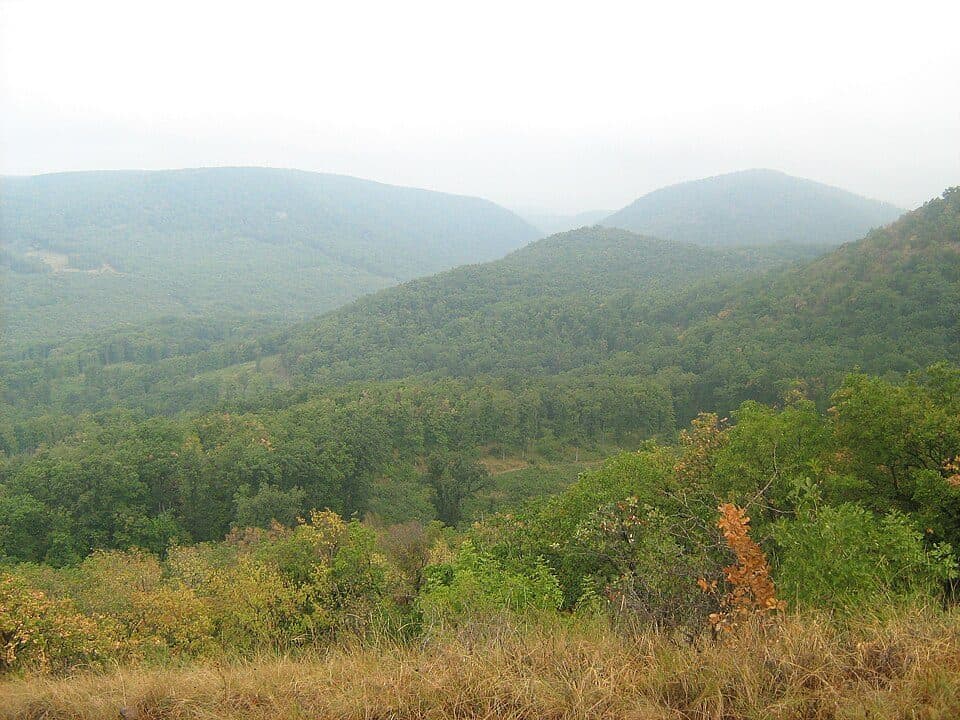
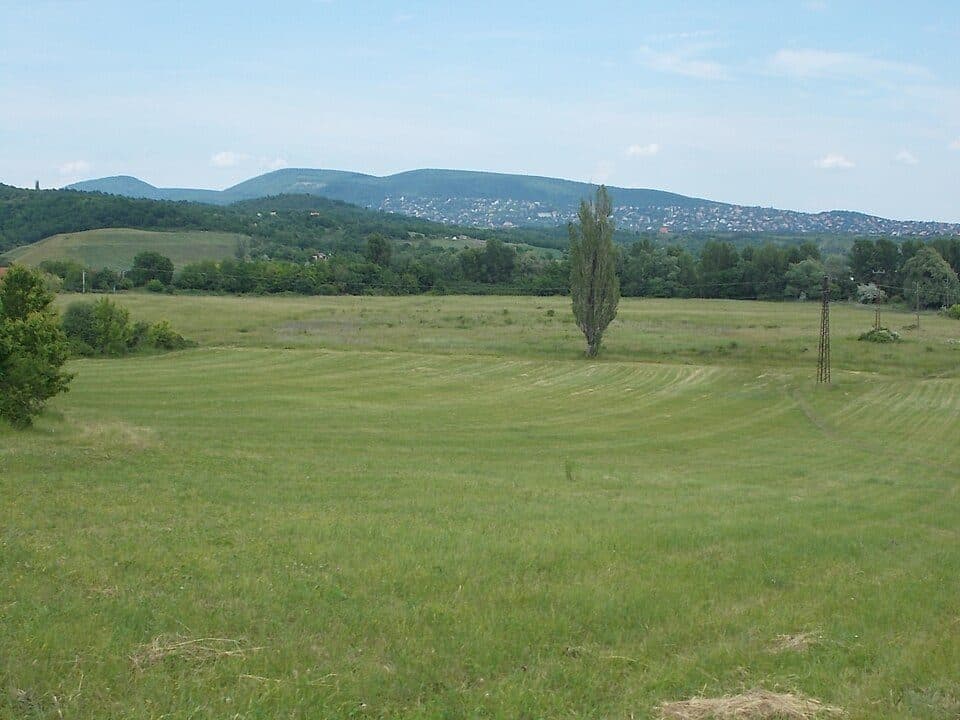
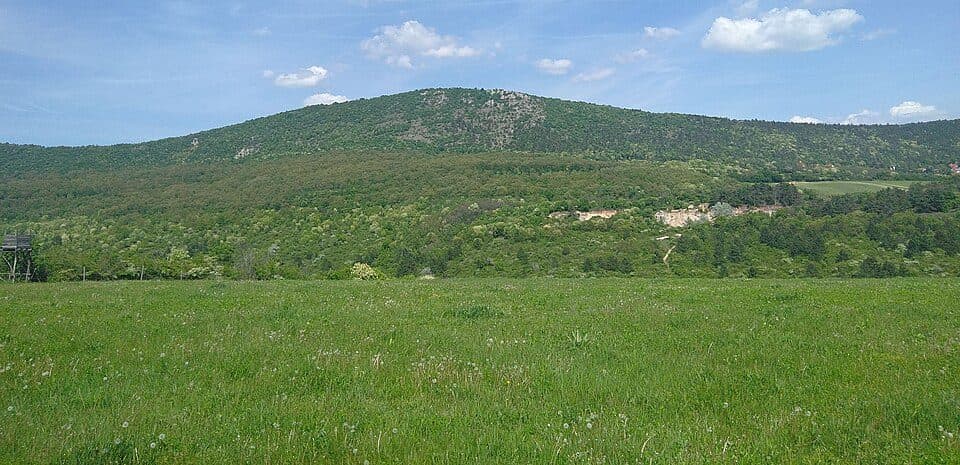
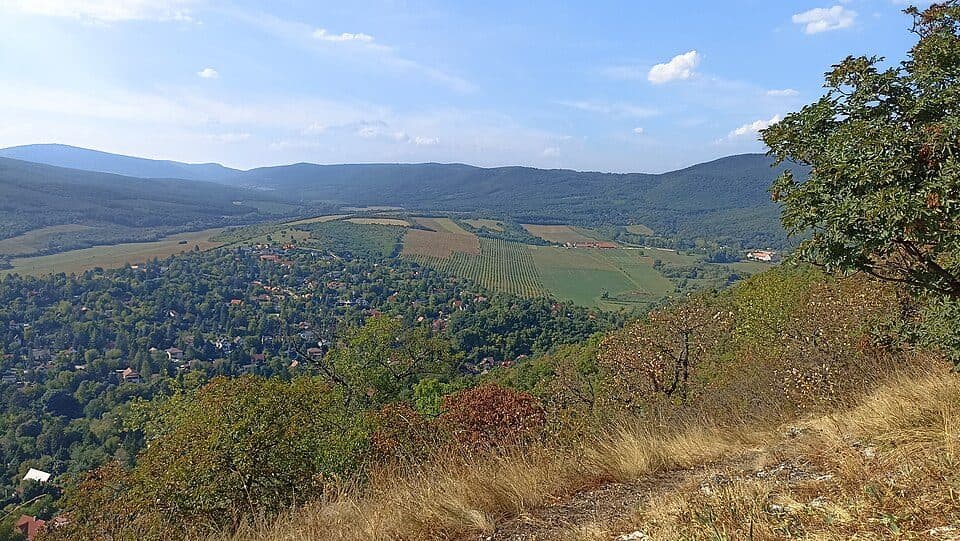
The surrounding landscape is typical of the Visegrád Hills — rugged volcanic rock formations rising above wooded slopes, with sweeping views across the Danube Bend region depending on where you stand. The rock face above the cave entrance bears a distinctive marker: a red stone plaque with a map of Hungary, and just above the opening, a patch of hematite stains the wall, a hint at the area's mining past. Inside, the cave — formed in andesite tuff — is small and steeply inclined, with ivy growing in its interior. The area feels especially atmospheric in autumn and spring, when the forest canopy thins and the rocky outcrops become more visible.
How to get there
- Szentendre — the cave lies within the town's boundaries in the Duna–Ipoly National Park, about 100 m west of Sas-kövi-barlang; moderate difficulty approach along the rock wall base
- Best combined with a visit to the nearby Sas-kövi-barlang on the same outing
Good to know
- The entrance is 2.3 m wide and 1.1 m high
- The cave is 2.3 m long with a vertical extent of 2.5 m
- Located within the protected Duna–Ipoly National Park — please respect conservation rules
Geologists still debate how the cave formed: some believe it's a weathering hollow reshaped by fallen debris, while others think it may be the upper remnant of an old exploratory mining adit — a theory supported by the hematite deposit on the rock face. It was discovered and surveyed in 1997 by researcher Imre Gönczöl and his team.