Ładowanie mapy…
Mravenčák Nature Monument
Nature reserve
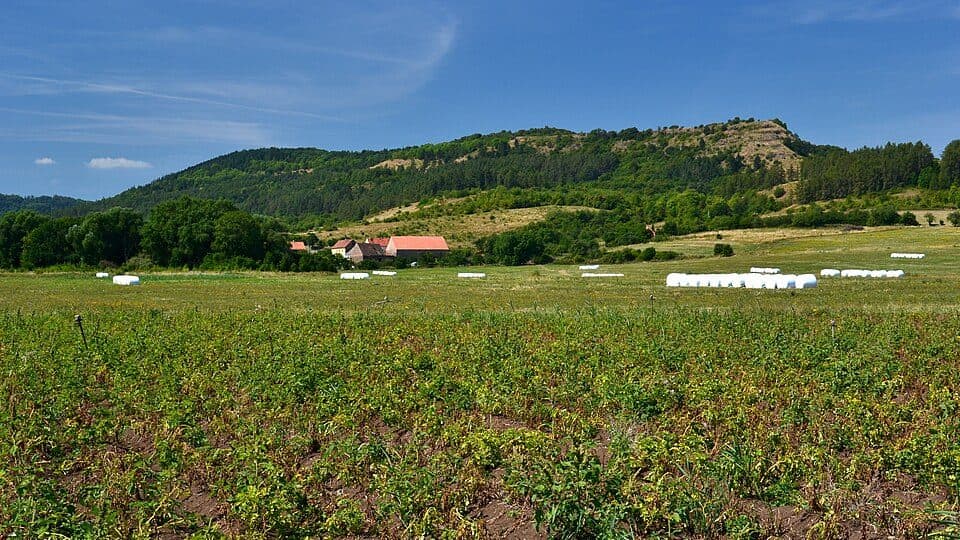
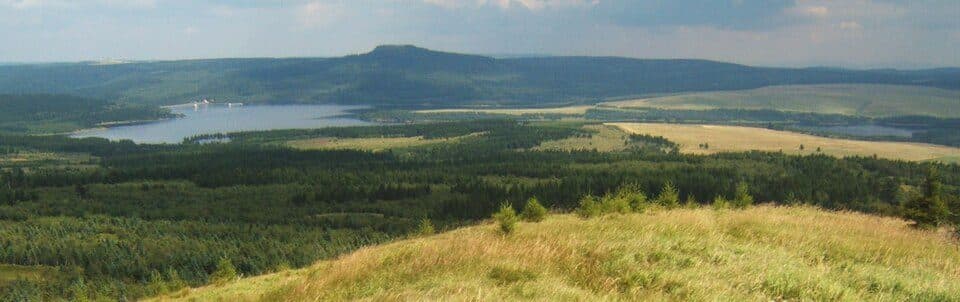
Ore MountainsMravenčák is a small volcanic hill in the northern Doupovské Mountains that packs a surprising amount of character into just 1.5 hectares - a rocky crag rising above the Ohře river valley, home to rare steppe flora found almost nowhere else in the region.
The cone-shaped peak reaches 531 metres above sea level on the right bank of the Ohře, south of Klášterec nad Ohří. Its most striking feature is a rocky outcrop on the southwestern slope, known as Jakubova skála or Čertův zub (Devil's Tooth) - a 3 to 6 metre high cliff made of leucite tephrite interlayered with tuff. In spring, the rocks come alive with the blooms of the Bohemian meadow pasqueflower, while summer brings a dry, warm scent from the sparse steppe grasses clinging to the thin, stony soil. The surrounding mixed forest, with its patches of old orchard trees hinting at past land use, adds a gentler contrast to the exposed rock face.
How to get there
- Klášterec nad Ohří — red trail, easy hike along a forest road skirting the southern and western slopes of the hill
- The red trail continues onward to the ruins of Egerberk Castle and via Úhošť to Kadaň
Practical information
- The protected area covers 1.5 hectares between 490 and 531 metres elevation
- Home to the protected Bohemian meadow pasqueflower and the rare few-flowered rock-cress
- Managed by the Nature and Landscape Protection Agency of the Czech Republic
- Please stay on marked paths and avoid lighting fires to protect the fragile steppe vegetation
Historical records list the hill under several older names, including Hackelberg and Mravenečník, echoing centuries of grazing and orchard use on slopes that are now carefully protected for their unique plant communities.