Ładowanie mapy…
Georgenfelder Hochmoor
Nature reserve
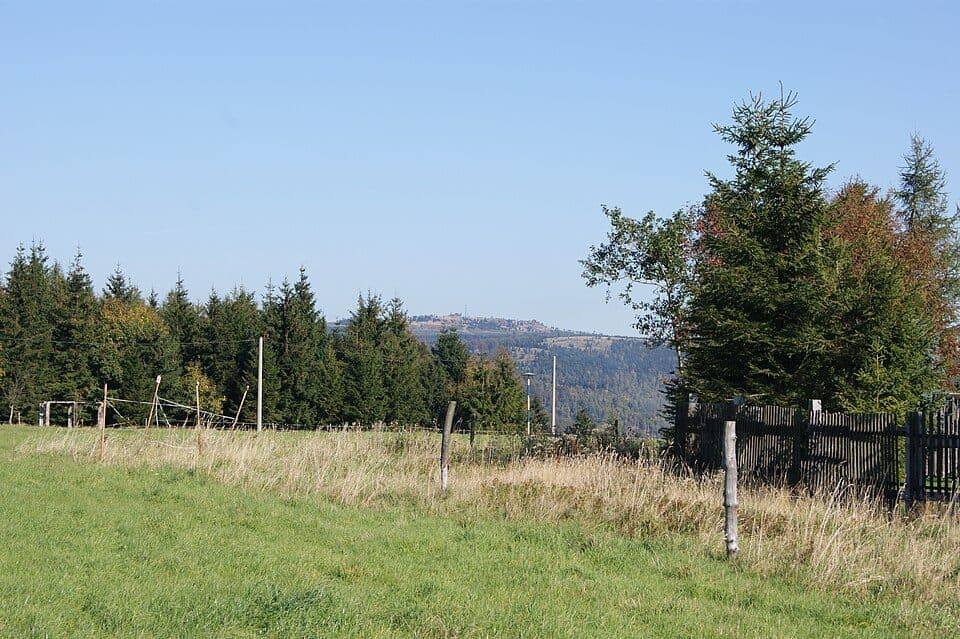
Ore MountainsThe Georgenfelder Hochmoor is one of the oldest nature reserves in Saxony — a genuinely ancient raised bog stretching along the ridge of the Ore Mountains, roughly 10,000 years in the making. A wooden boardwalk leads visitors right into this fragile, otherworldly landscape of dwarf mountain pines, cottongrass and cranberry, more reminiscent of Arctic tundra than a mid-European mountain range.
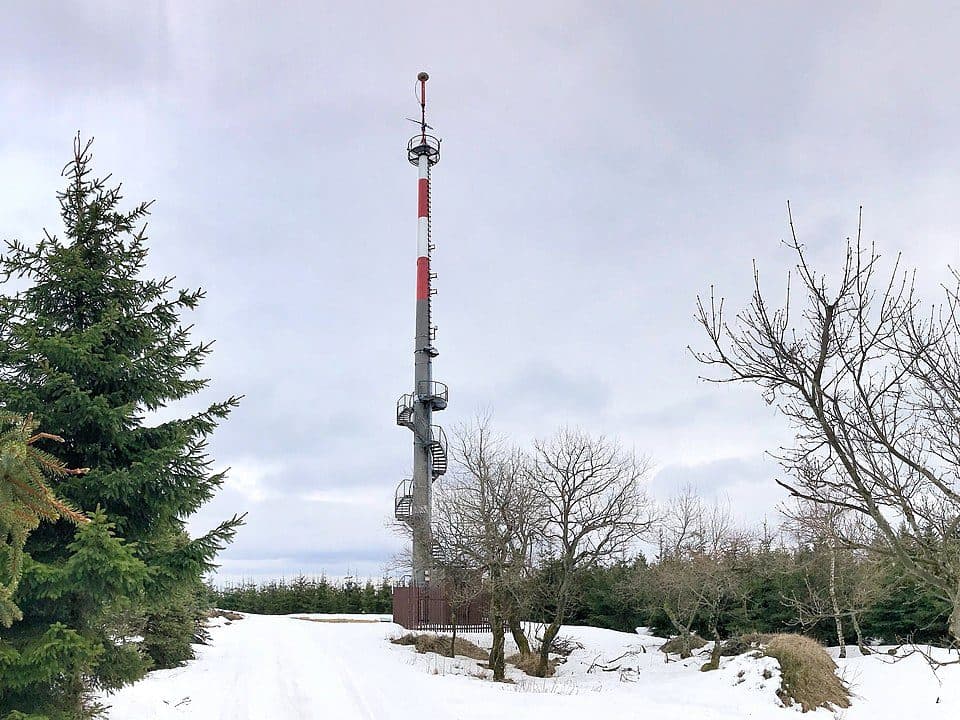
The open, gently domed surface of the moor sits at about 870 m, with the rocky outcrops of the Great and Little Lugstein nearby, crowned by a distinctive telecommunications tower. In summer the bog buzzes with rare insects and blooming bog plants; in autumn the bilberry shrubs turn a deep red; in winter the whole plateau turns into a hushed, snow-covered scene perfect for a quiet snowshoe walk. Weather on the exposed ridge can change quickly, so pack warm layers even in summer.
How to get there
- Parking near Zinnwald-Georgenfeld — about 500 m to the moor entrance, flat terrain, easy
- Accessible only on foot or by bike from the car park; the boardwalk itself runs about 1,200 m
Practical information
- Usually open daily from May to October (as of 2024)
- Footpath only — not wheelchair or pram accessible
- Bilingual (German/Czech) information panels along the route
- Protected area — stay on the marked boardwalk to protect rare plants and animals
Interesting fact: the peat layer grows only a few centimetres per century, and the moor's five-metre-thick peat holds pollen thousands of years old, letting scientists reconstruct the region's ancient climate and vegetation.