Ładowanie mapy…
Military Cemetery No. 6 – Krempna
Tourist attraction
Beskid Niski (Low Beskids)Military Cemetery No. 6 in Krempna is one of those quietly powerful places that stops you in your tracks — a moving memorial to soldiers of three nationalities who fell along the Wisłoka River in the winter of 1914. Designed by the renowned architect Dušan Jurkovič, it stands out for its striking artistic form, far removed from the look of a typical military graveyard.
At the heart of the cemetery rises a stone monument resting on six pillars arranged in a circle, crowned with a concrete wreath decorated with copper oak leaves. Those leaves carry a remarkable story — they were gifted by Polish and Austrian soldiers serving with the UN peacekeeping forces on the Golan Heights. Two moving inscriptions on the pillars read: 'Though you have died — you live in memory, in love, and in the blessing of peace' and 'We fought side by side, we shall rise shoulder to shoulder.' Here lie 53 Austro-Hungarian soldiers, 33 Russians, and 34 unknowns — most of them having died in a field hospital set up in houses near the local Orthodox church.
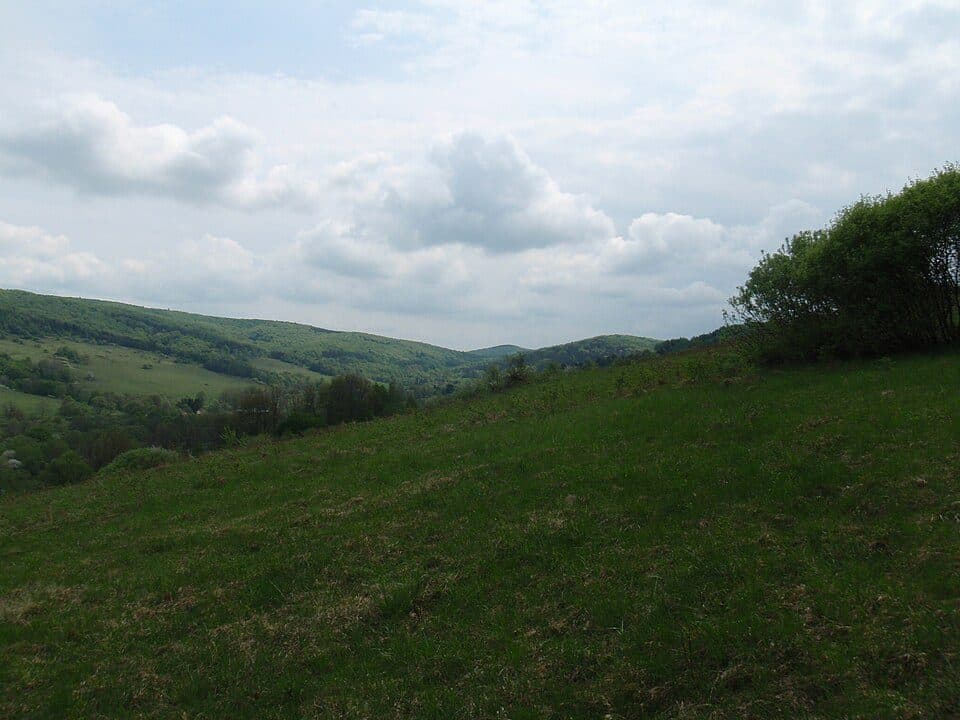
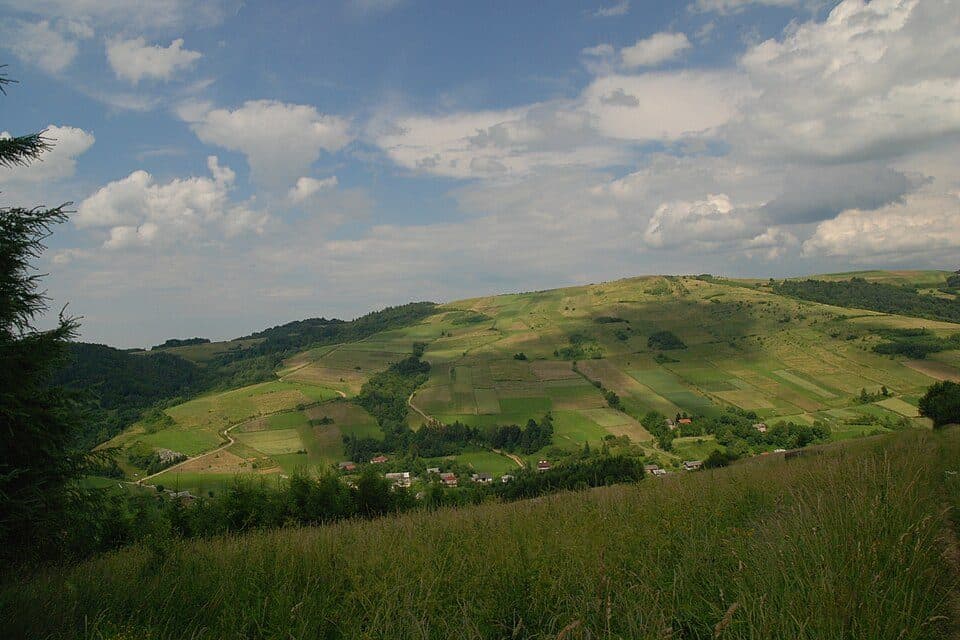
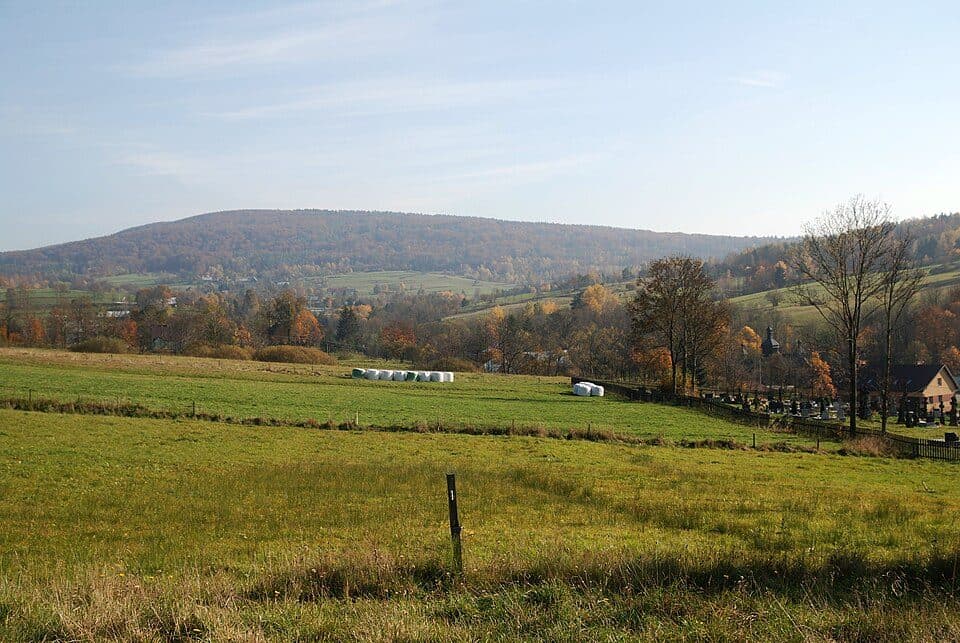
The cemetery sits in the tranquil village of Krempna, surrounded by the gentle Beskid landscape of the Magura Wątkowska range. It is a place of quiet reflection in every season — lush green in spring, golden in autumn, and hauntingly still under winter snow.
How to get there- Krempna (village centre, parking near the Orthodox church) — the cemetery is a short walk away, easy access
- Part of the Eastern Front of World War I Trail in the Subcarpathian Voivodeship
- Free entry, open year-round
- Belongs to Cemetery District I Nowy Żmigród — many similar WWI cemeteries can be found in the surrounding area
This is one of over 400 West Galician war cemeteries built by the Imperial and Royal Military Command in Kraków — well worth combining with a wider exploration of this remarkable historical trail through the Low Beskids.