Ładowanie mapy…
Spiš (Spisz)
Spiš is one of those rare regions that rewards the curious traveller — quieter than the nearby Tatras, yet rich in dramatic scenery, medieval heritage and an atmosphere that feels genuinely timeless. Straddling the Polish-Slovak border, it offers far more than just a gateway to higher peaks.
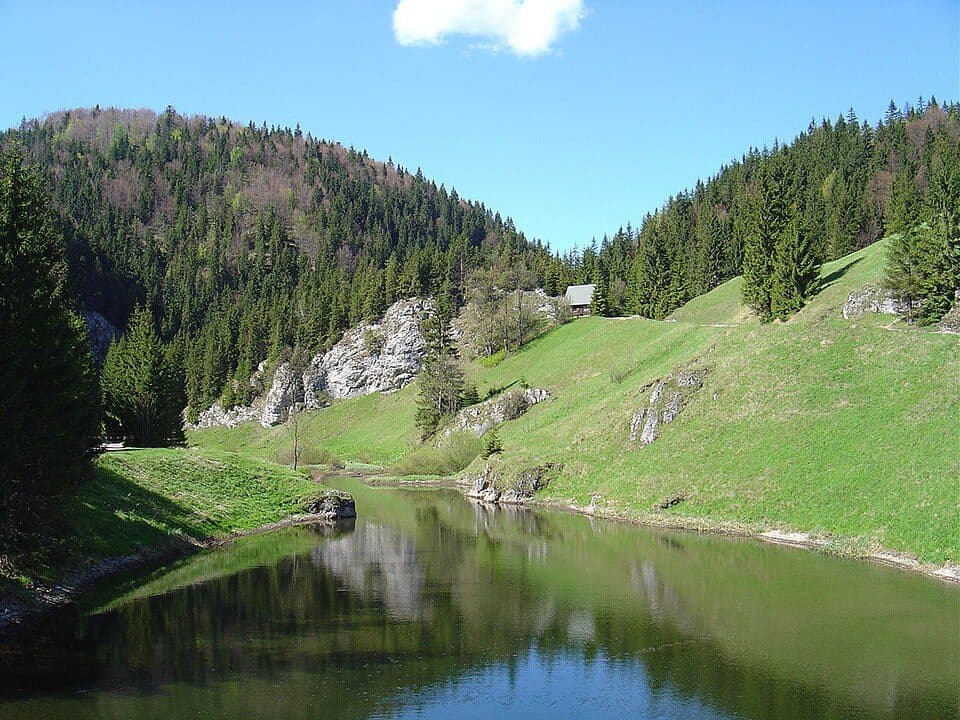
The landscape shifts beautifully across Spiš: from the gentle rolling hills and traditional villages of the Polish side — think Niedzica with its fairy-tale castle above the Czorsztyn Lake — to the wide open vistas of the Poprad Basin and the Levoča Hills on the Slovak side, with the Eastern Tatras rising on the horizon. Walking here, you get the sense that this corner of the Carpathians has been quietly going about its business for centuries, unbothered by mass tourism.
Highlights:
- Niedzica Castle (Dunajec Castle) — one of the best-preserved castles in the Polish Carpathians, dramatically perched above Czorsztyn Lake.
- Spišský hrad (Spiš Castle) — a UNESCO World Heritage Site and one of the largest castle ruins in Central Europe, unmissable on the Slovak side.
- Belianske Tatras (Eastern Tatras) — less crowded than the Western Tatras, with lovely trails around Ždiar and Javorina.
- Levoča Old Town — a beautifully preserved medieval town with a Gothic main square and the remarkable Church of St. James.
Practical info:
- Best season: May–September — mild valley climate, green meadows and all trails accessible; autumn brings golden foliage and fewer visitors.
- Base towns: Niedzica or Łapsze Niżne (Polish side); Kežmarok or Poprad (Slovak side).
- Trail difficulty: mostly easy to moderate — a great region for families and hikers who prefer scenic walks over technical climbs.
- Getting there: by car from Kraków approx. 2 hours via Nowy Targ; regional buses connect Nowy Targ with Polish Spiš villages; train to Poprad for the Slovak side.
Here is a fascinating footnote to the region's deep past: a travertine cast of a Neanderthal skull was discovered near Poprad in Gánovce — proof that Spiš has been home to humans for tens of thousands of years.