Ładowanie mapy…
Kő-lyuk Cave
Cave
Bükk MountainsKő-lyuk is one of the most fascinating caves in Hungary's Bükk Mountains, a place where prehistory and geology meet in dramatic fashion. Hidden at the foot of a rock face, this cave has yielded cave bear skulls arranged by prehistoric humans, artifacts spanning from the Paleolithic to the Bronze and Iron Ages, and it remains a site that still guards many secrets.
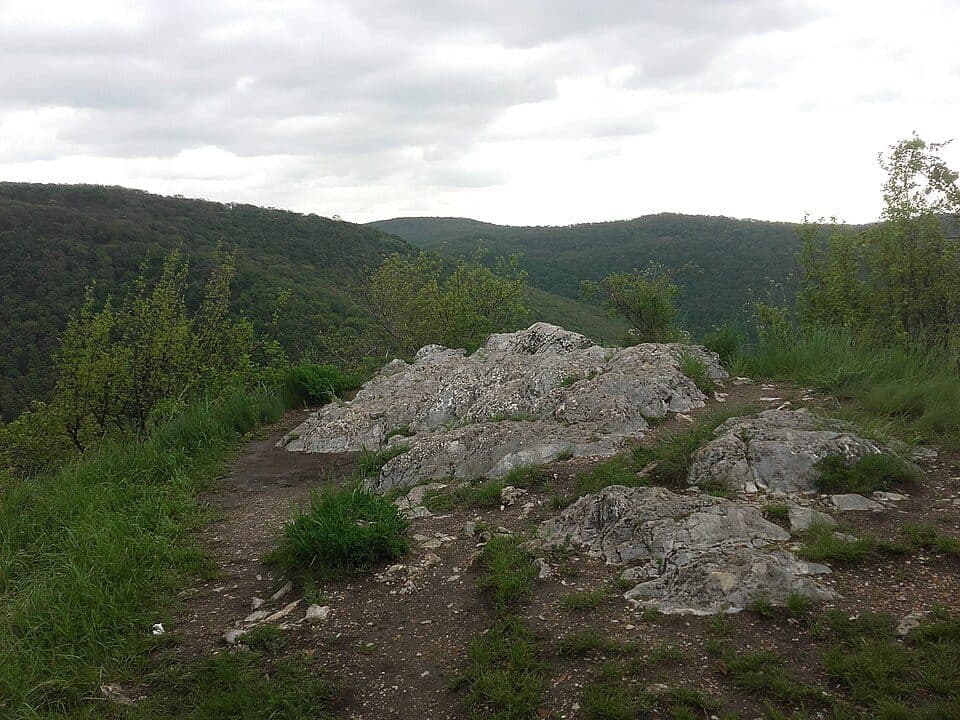
Located on the Kis-fennsík plateau within the Bükk highlands, on the southern side of Kőlyuk-galya near the neighboring Hillebrand Jenő Cave, the entrance opens at 441 meters above sea level. Formed in Triassic limestone as an inactive spring cave, its 623 meters of passages are decorated with varied stalactite formations and moonmilk deposits. The cave also serves as an important bat roost, giving it a hushed, protected atmosphere year-round.
How to get there
- Starting from Parasznya, within the Bükk National Park area on the Kis-fennsík plateau - moderate difficulty
- Nearby you'll find the Hillebrand Jenő Cave and the Vénusz Cave, easily combined into one outing
Practical information
- The entrance is sealed with a bat-friendly grille - visits only with permission from the Bükk National Park Directorate
- Classified as a strictly protected cave; basic caving equipment is sufficient
- Sections not open to general tourism require special permission from the park authorities
Over the decades the cave has appeared in scientific literature under more than a dozen different names, often confused with its neighbor Hillebrand Jenő Cave. Researchers even found cave bear skulls deliberately placed by Ice Age humans - possibly as guardians over a Bronze Age burial discovered nearby.