Ładowanie mapy…
Blaueis
Blaueis is the northernmost glacier in the entire Alps — a small but striking icy relic tucked into a rocky basin beneath the peaks of the Berchtesgaden Alps. It's a rare chance to witness a retreating alpine glacier before it disappears for good.
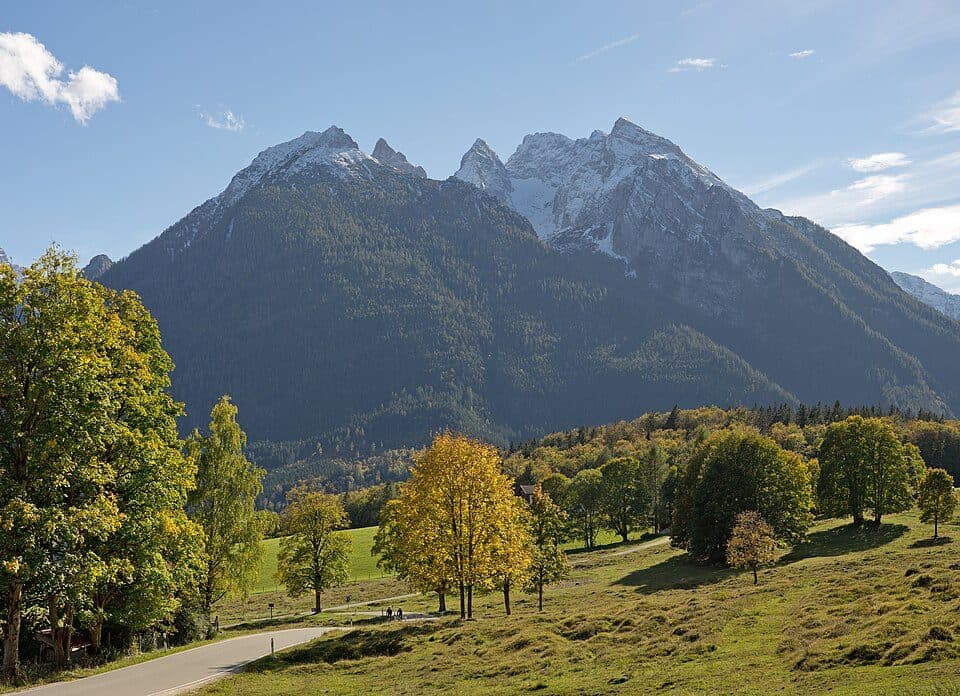
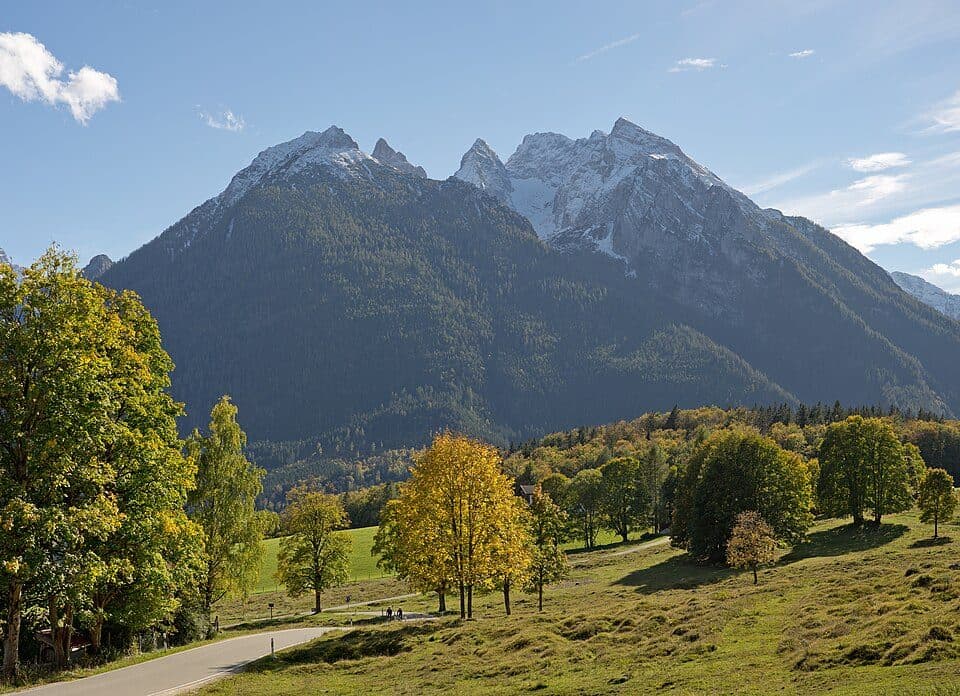
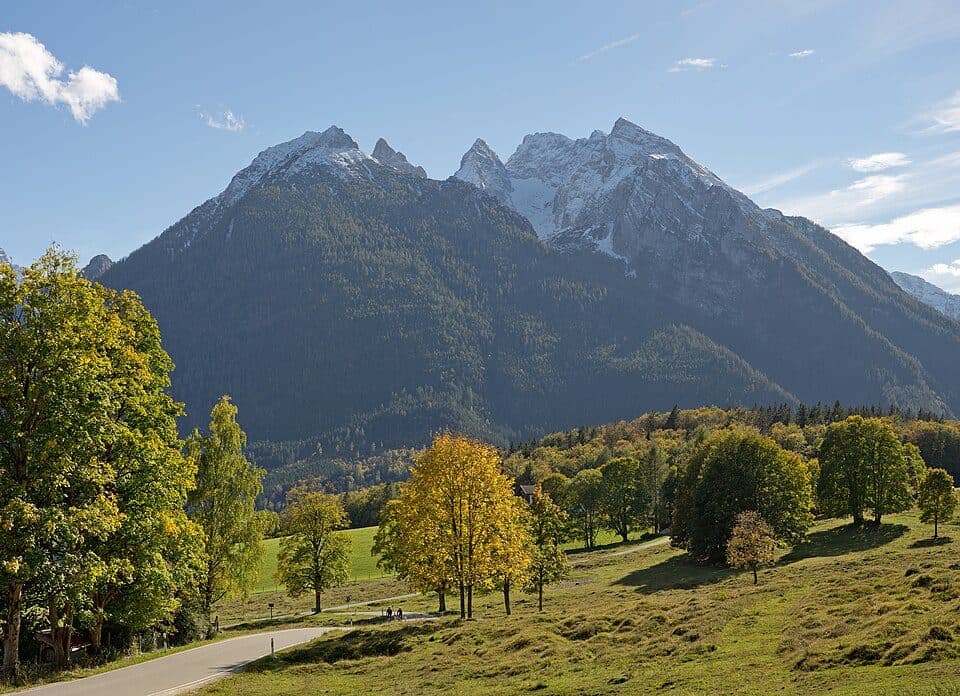
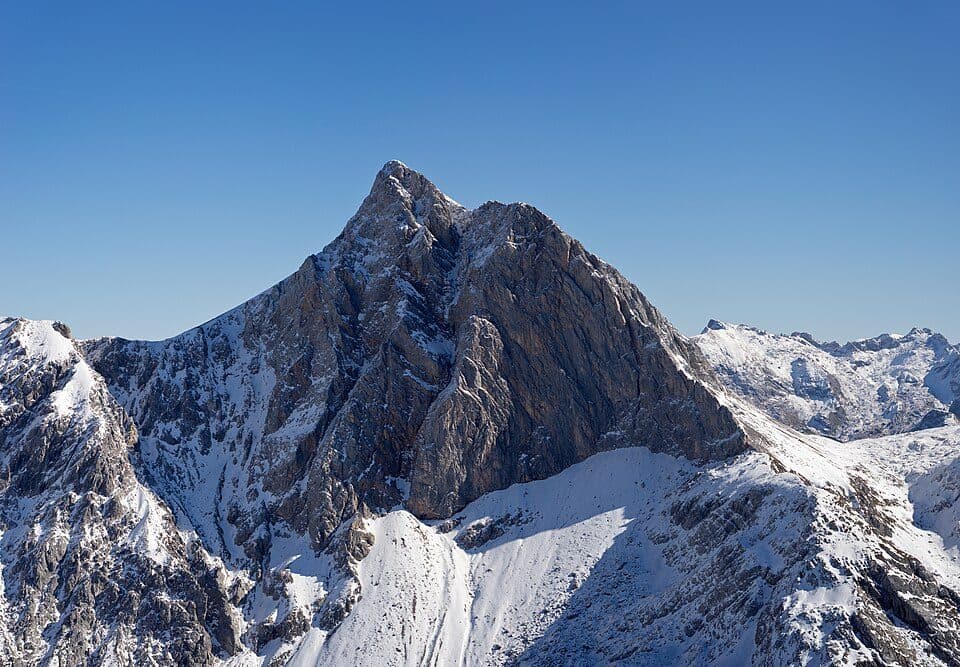
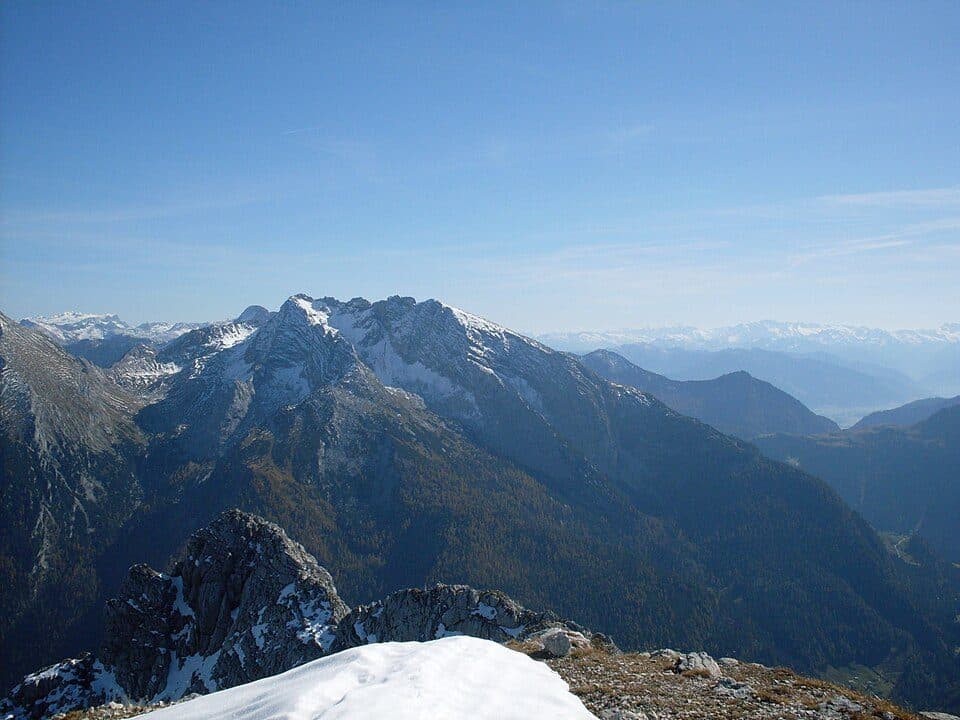
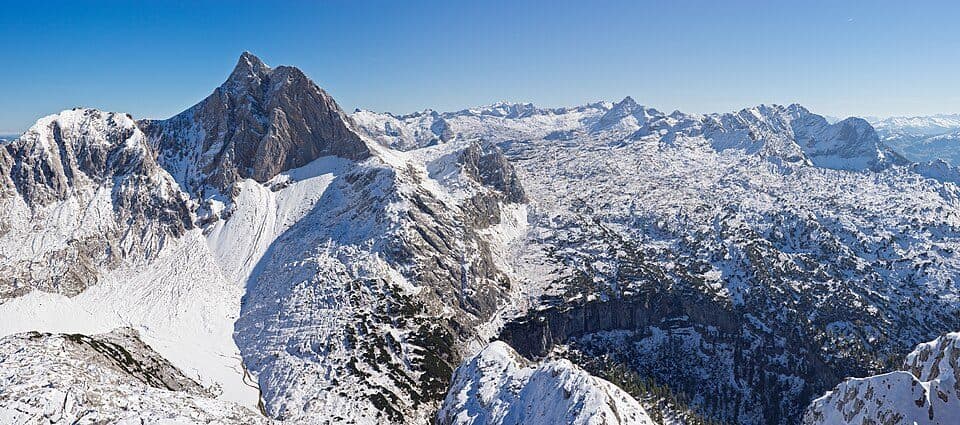
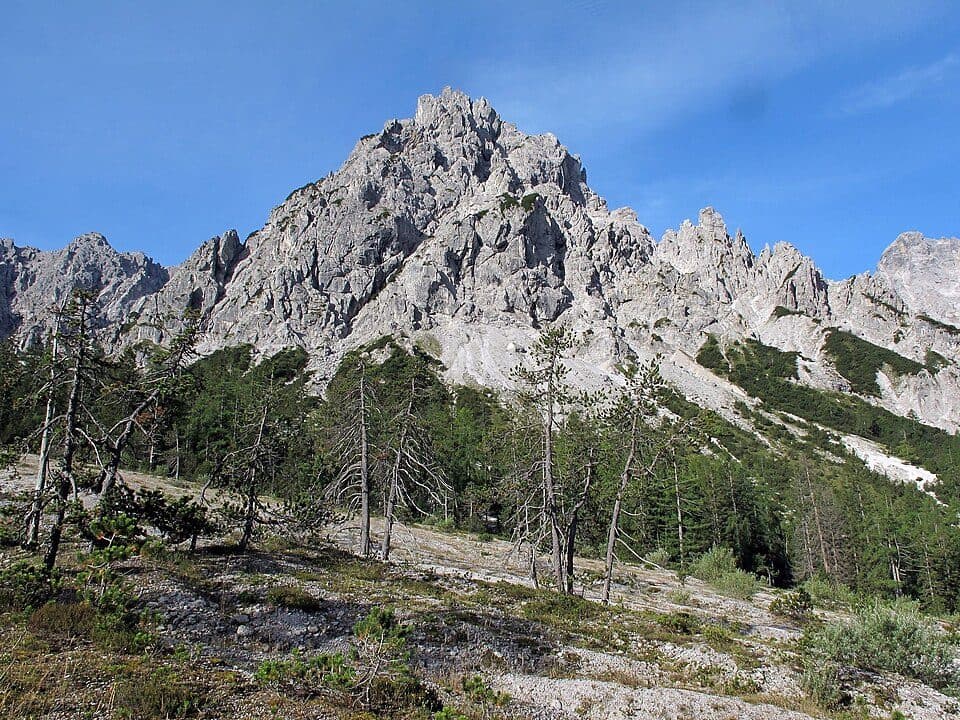
The glacier sits in the upper Blaueiskar basin, ringed in a horseshoe by the cliffs of Blaueisspitze (2480 m), Hochkalter (2607 m) and Kleinkalter (2513 m). Its north-facing position has helped it survive longer than many alpine glaciers, though since the mid-1980s exposed rock has split it into an upper glacier and a lower dead-ice field. In summer the cirque feels raw and dramatic, framed by steep rock walls; in spring and early summer snow cover makes the ascent easier, while in autumn the bare ice can turn treacherous.
How to get there
- Ramsau or Hintersee — about 3 hours' walk to the Blaueishütte (1651 m), moderate difficulty
- From Blaueishütte, continue up to the glacier and Blaueisscharte (approx. 2400 m) — demanding mountain terrain
Practical information
- The upper section of the glacier reaches slopes of up to 55° — glacier gear and experience required
- The best time is generally the second half of June, when snow bridges make crossing the marginal crevasse easier
- In late summer and autumn the crevasse widens and bare ice has caused fatal falls in the past
- From Blaueisscharte, an easy climb (UIAA II) leads on to the summit of Hochkalter
In 1874, Ramsau mountain guide Johann Grill, known as Kederbacher, made the first ascent of this route with E. Richter — a historic climb across a glacier that, like its neighbour the Watzmann glacier, is expected to vanish before 2030.