Ładowanie mapy…
POW Camp, Sources of the Vltava
This quiet corner of the Bohemian Forest hides a remarkable double identity — it is both the symbolic birthplace of the Vltava, the Czech Republic's longest river, and the site of a World War II prisoner-of-war camp where Soviet officers endured brutal conditions. Few places blend natural beauty and poignant history so unexpectedly.
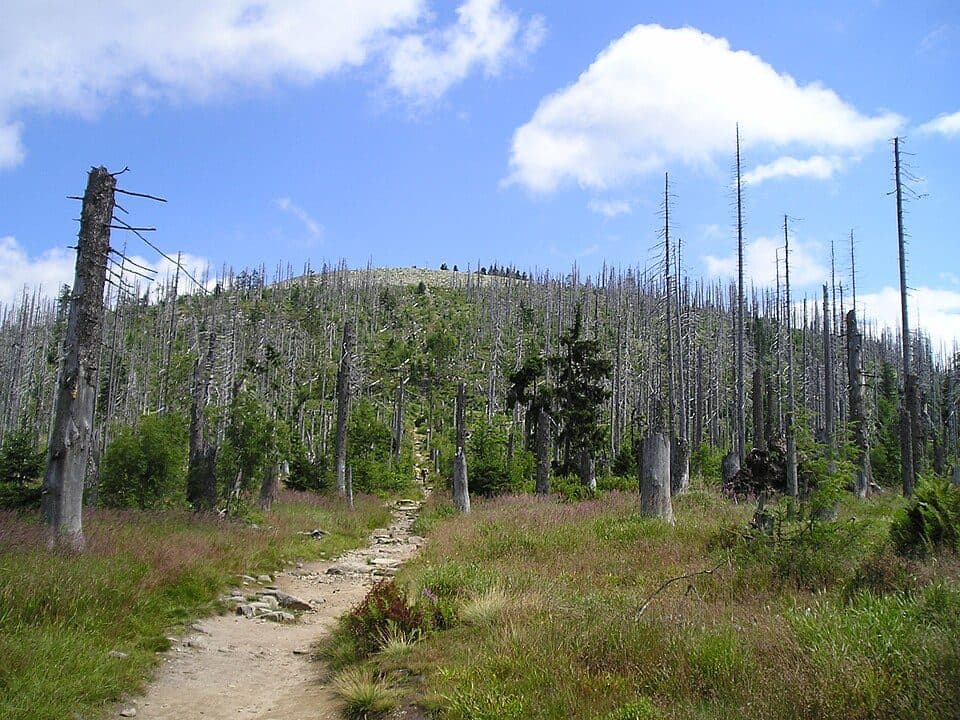
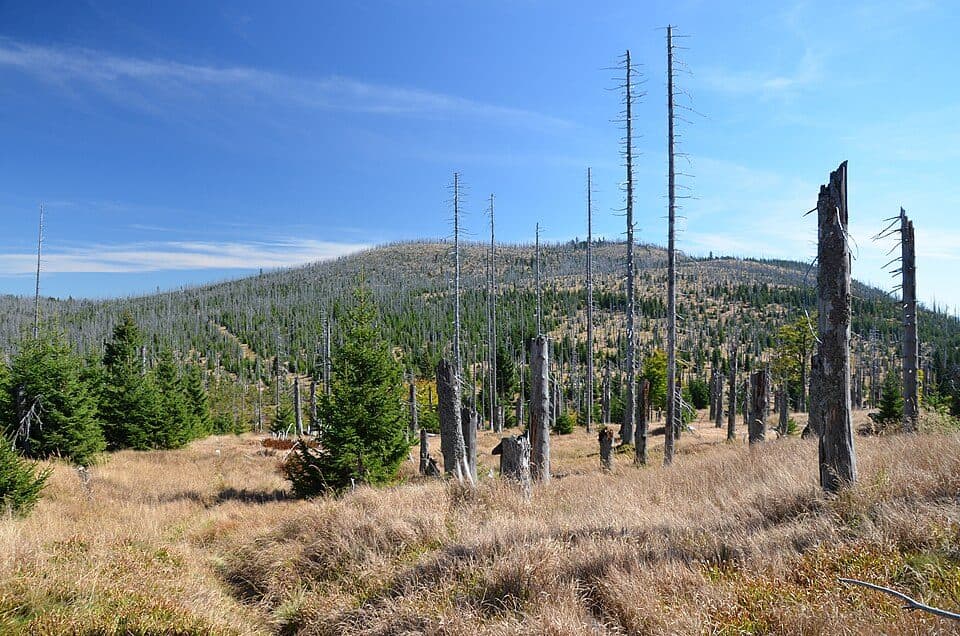
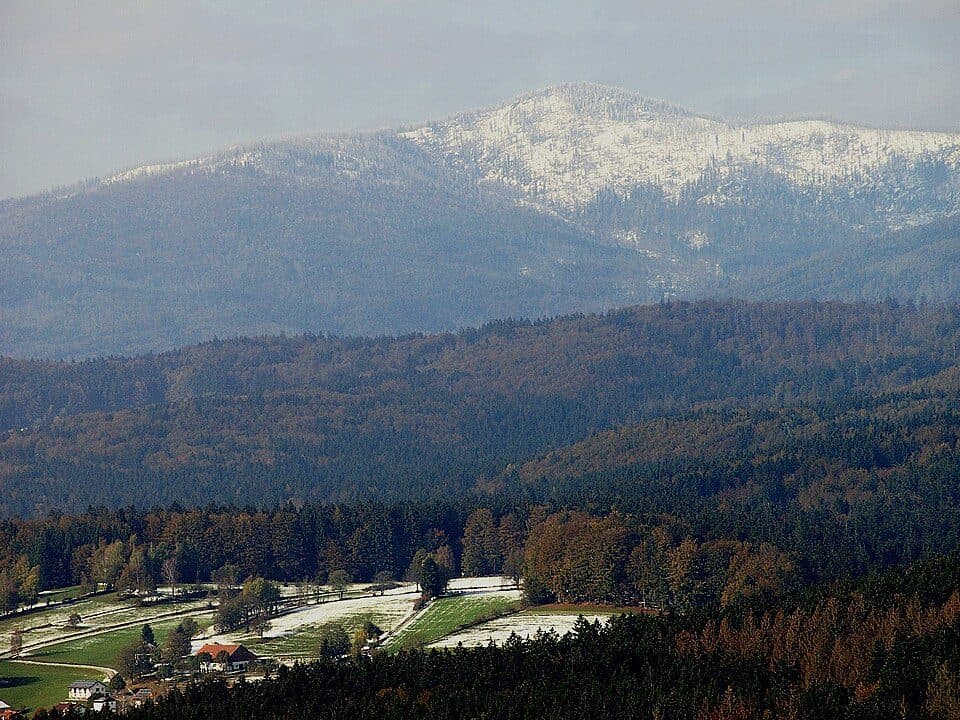
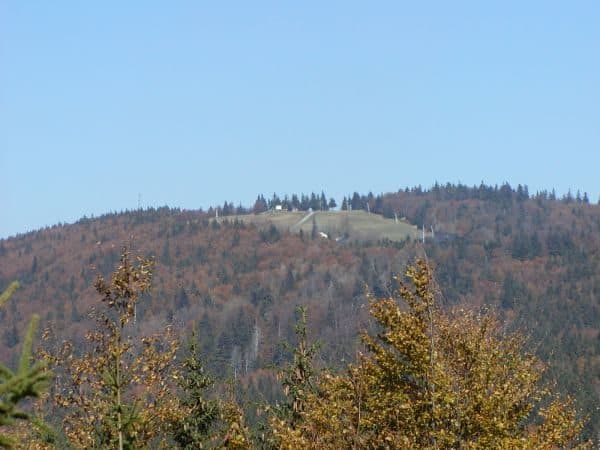
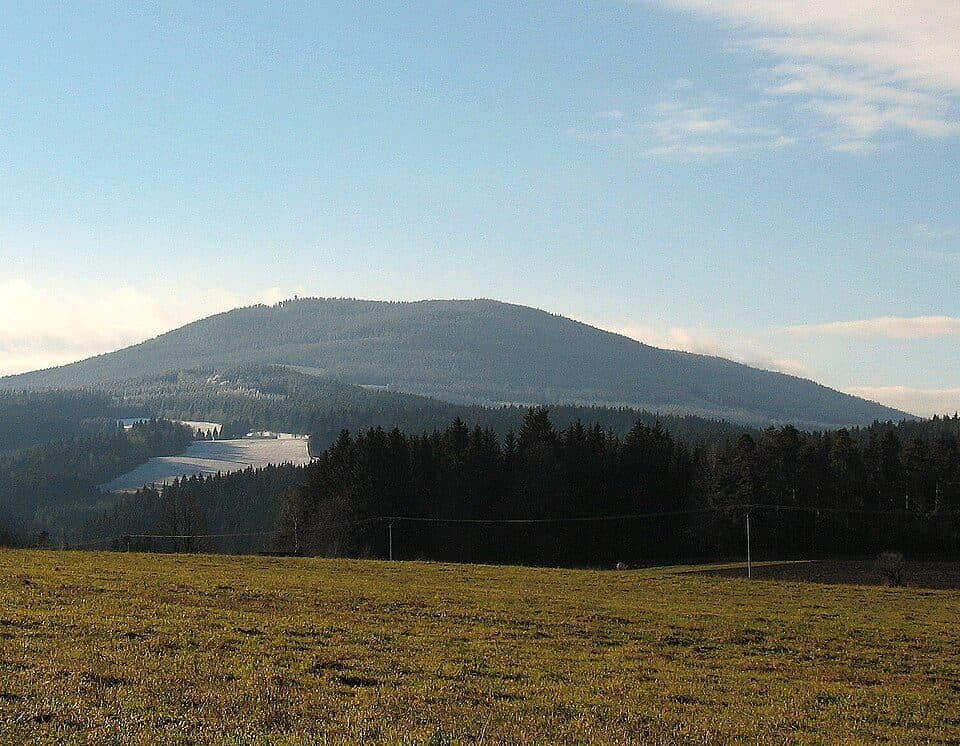
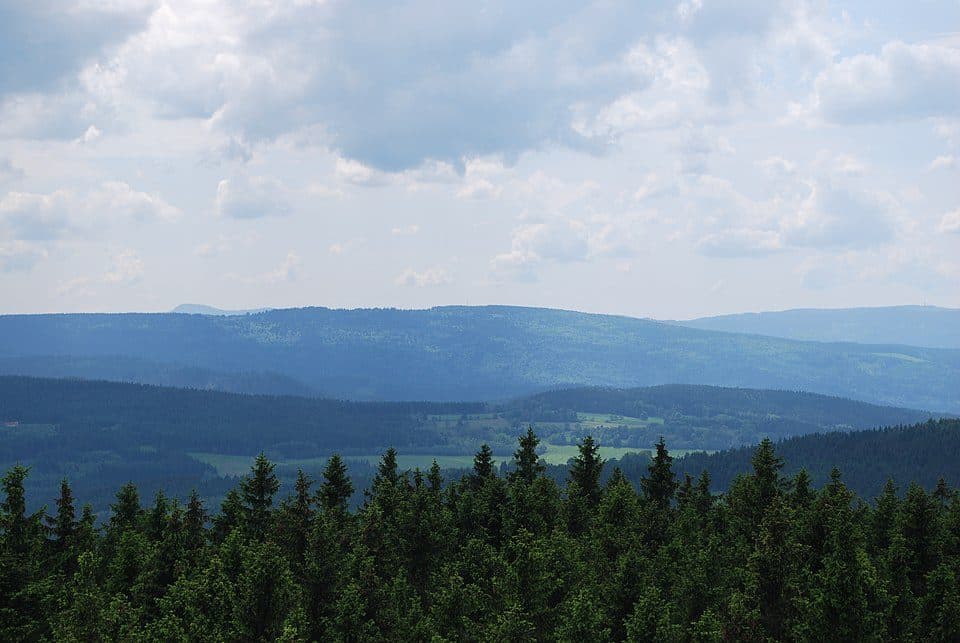
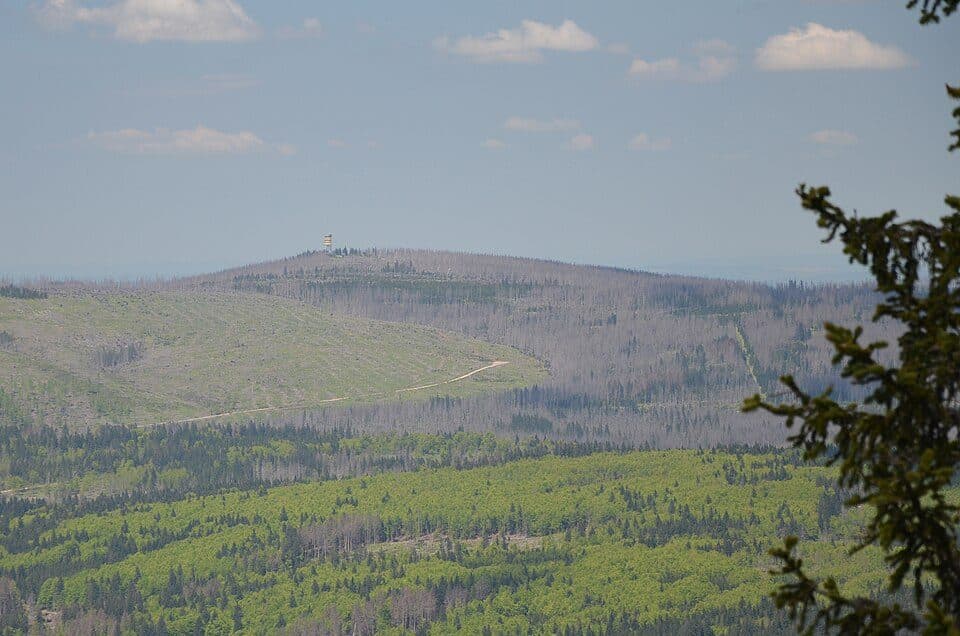
Located about 5.5 km south-southwest of Kvilda, just 600 metres from the German border, the site sits deep in a classic Šumava landscape of peat bogs, spruce forests and open meadows. The symbolic spring itself is a stone well fed by wooden pipes laid under the asphalt path — the true natural springs lie higher up on the inaccessible southeastern slope of Černá hora (1316 m). The atmosphere changes beautifully with the seasons: lush and birdsong-filled in summer, dramatically golden in autumn, and utterly remote under a winter blanket of snow.
How to get there- Kvilda — blue hiking trail, approx. 5.5 km, easy; also accessible via asphalt road or cycling route 1041
- By car: an asphalt road leads directly to the spring, with parking available nearby
- A border crossing to Germany (Siebensteinkopf / Sedmiskalí) opened in 2009, approx. 1.1 km from the spring
- A wooden sculpture by carver David Fiala has stood at the symbolic spring since 2004
- The area has been part of Šumava National Park since 1991
On 30 April 1945, an American reconnaissance unit reached this spot and found 70 emaciated Russian prisoners — a fact that gives this serene forest clearing a weight and significance that lingers long after you leave.