Ładowanie mapy…
Hunger Stone
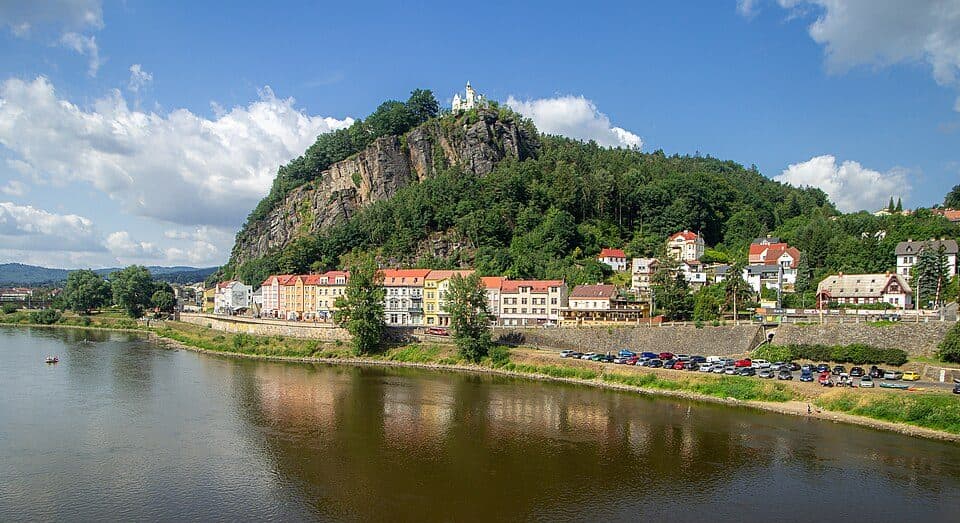
The Hunger Stone is a small rock in the riverbed of the Elbe in Děčín, and it happens to be one of the oldest hydrological monuments in Central Europe. When water levels drop low enough, carved dates and inscriptions dating back centuries emerge from beneath the surface - silent witnesses to droughts and hardship.
This isn't a mountain or a summit, but a fascinating slice of history embedded right in the river. It's best visited during low water periods, when the stone rises above the current and you can read the old markings, including the famous German inscription 'Wenn du mich siehst, dann weine' (When you see me, weep) and a later Czech verse warning of drought. A stroll along the Elbe embankment beneath Tyrš Bridge is pleasant any time of year, though it's especially atmospheric in late summer and early autumn when water levels tend to fall.
How to get there
- Děčín, riverbank on the left side of the Elbe below Tyrš Bridge - short walk from the town centre, a few minutes, easy
- Also accessible via the riverside promenade from the direction of Děčín train station
Practical information
- The stone is visible on average 126 days per hydrological year
- The oldest legible inscription dates from 1616
- The embankment near the stone was built around 1911, and the rock itself was cleaned and its surroundings restored in 1994
According to local legend, if the stone were ever submerged forever - for instance due to the construction of a dam below Děčín - it would herald an era of lasting prosperity. For now, though, the Hunger Stone still resurfaces from time to time, reminding visitors of the droughts of centuries past.