Ładowanie mapy…
Saxon Switzerland National Park
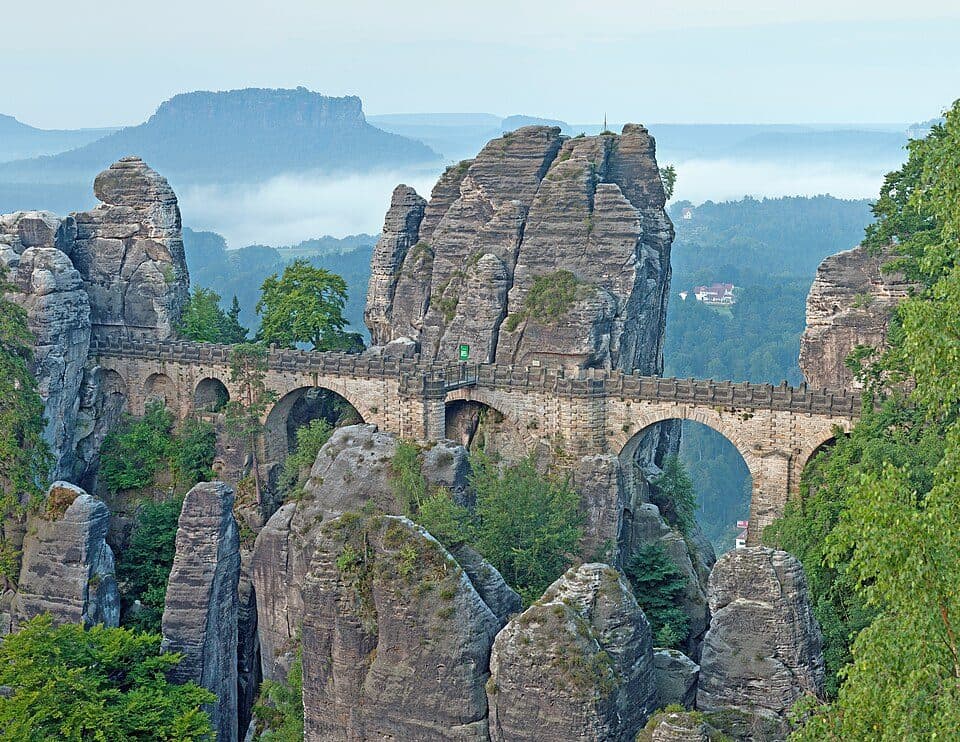
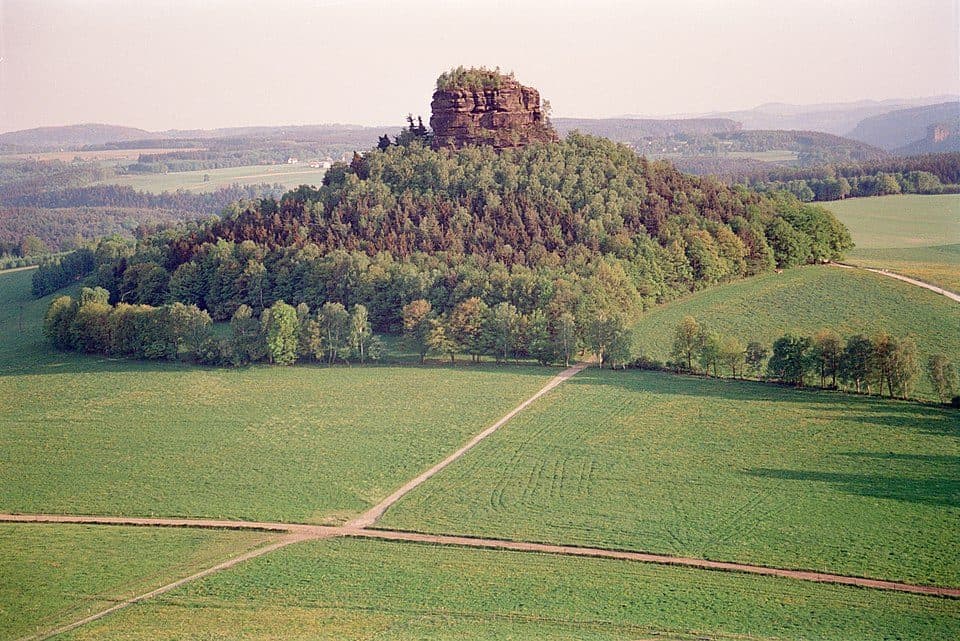
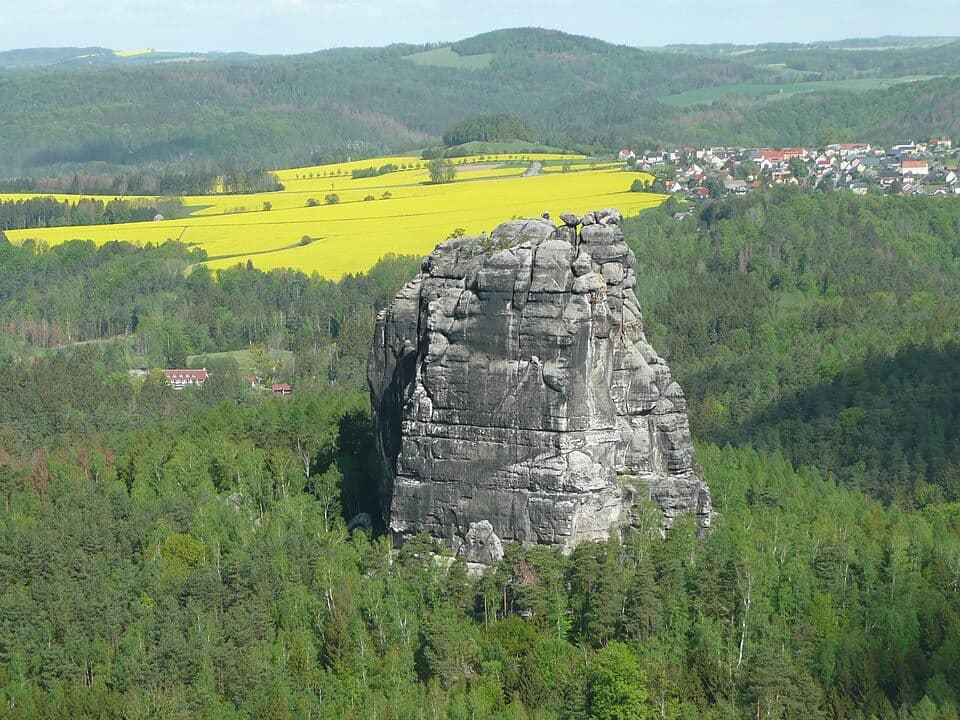
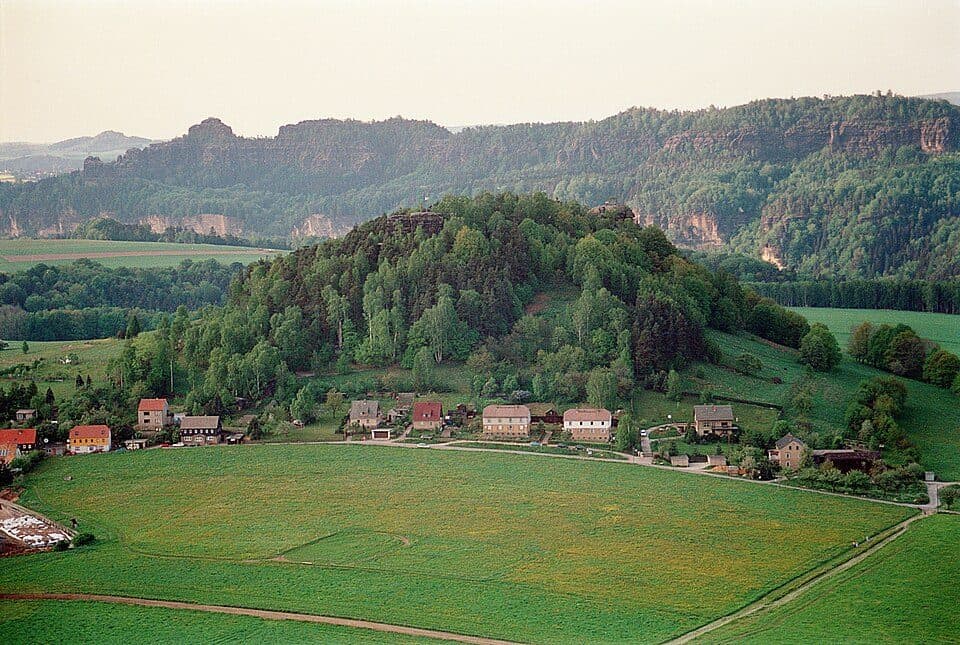
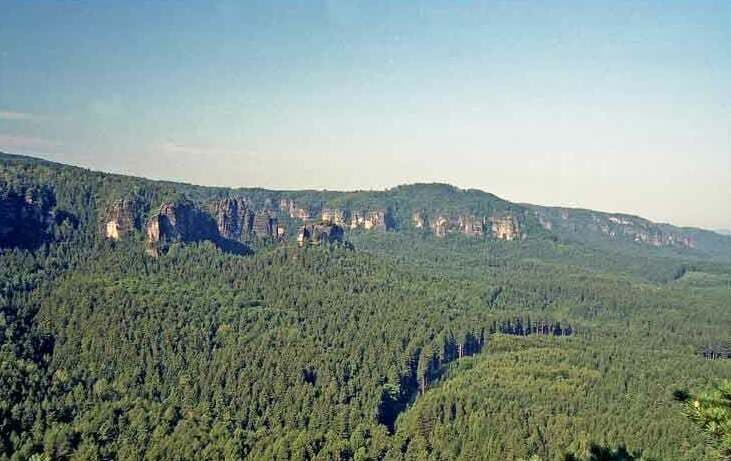
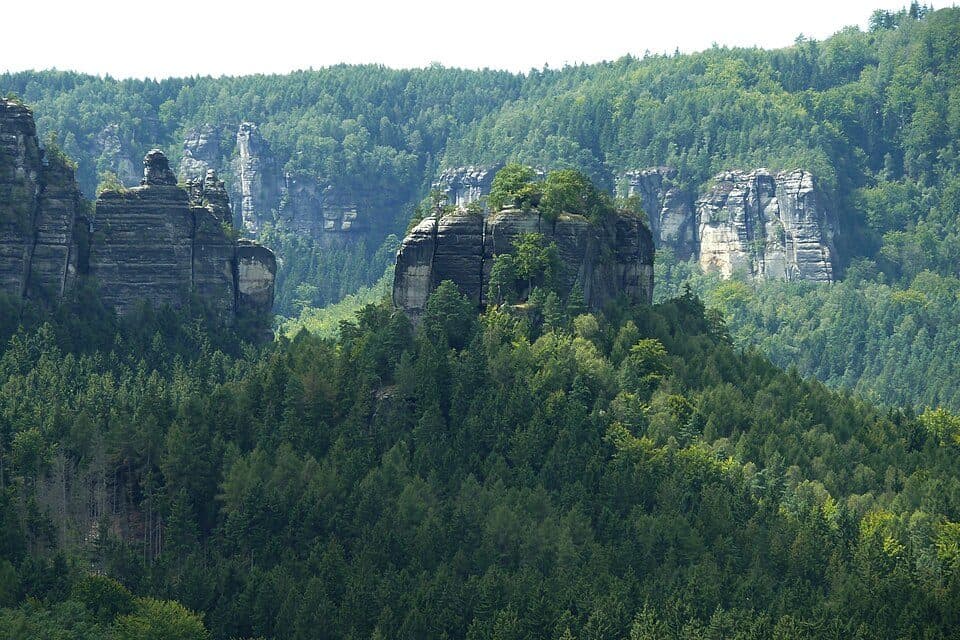
Saxon Switzerland National Park is one of Germany's most dramatic natural landscapes — a world of soaring sandstone towers, canyon-like gorges, and ancient beech forests draped in mist. Covering 93.5 km² in the Elbe Sandstone Mountains of the Free State of Saxony, it draws over 1.7 million visitors a year and never fails to leave an impression.
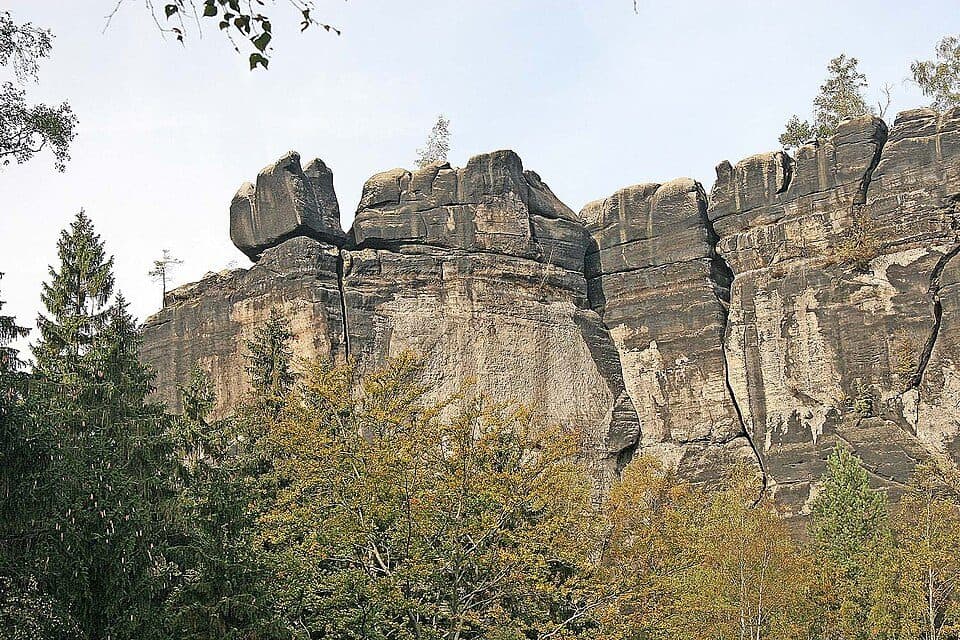
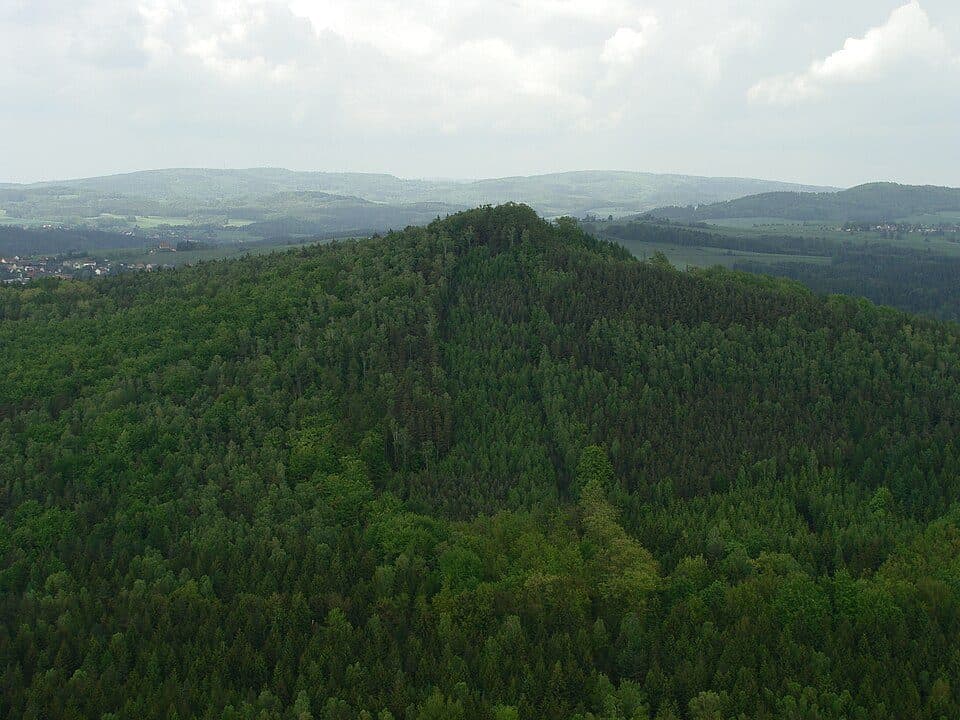
The scenery shifts dramatically depending on where you stand. In the deep, shadowy ravines the air stays cool and damp even in summer — almost like stepping into a cellar — while the exposed sandstone ridges bake in the sun and face wild temperature swings of up to 60°C between day and night. Autumn turns the beech forests around the Großer Winterberg (556 m) into a blaze of copper and gold, and winter brings a quiet, almost otherworldly stillness to the rock formations. The park has two distinct sections: the western area with the iconic Bastei viewpoint (305 m) and the Polenz valley, and the eastern area encompassing the Schrammsteine formations, the Großer Zschand, and the border with the Czech Bohemian Switzerland National Park.
How to get there- Bad Schandau (rail station / parking) — red trail towards Schrammsteine, moderate, approx. 3–4 hours return
- Rathen (ferry across the Elbe) — trail up to the Bastei, yellow/red markings, approx. 1–1.5 hours, easy to moderate
- Hinterhermsdorf — gateway to the 'Hintere Sächsische Schweiz', varied local trails, moderate difficulty
- All visitors must stick to marked paths — around 400 km of signed walking trails and 50 km of cycle routes are available.
- Inside the core zones (Kernzone) only officially marked trails are permitted.
- Peregrine falcon nesting protection zones are enforced from March to August — some climbing walls are closed during this period.
- The National Park Centre and administration are based in Bad Schandau.
- Cyclists share trails with walkers; hikers always have right of way.
Fun fact: the park is home to 16 of Germany's 18 native bat species, and both the beaver and the peregrine falcon have been successfully reintroduced here after local extinction. The historic 'Malerweg' (Painters' Trail), once walked by Romantic-era artists, remains one of Saxony's most celebrated long-distance routes.