Ładowanie mapy…
Kodešova skála is a small but strikingly beautiful basalt rock formation in Heřmanice in the Frýdlant region, famous for its rare fan-shaped arrangement of columns. It looks almost like a stone bouquet frozen in time, with thin basalt columns spreading outward and upward.
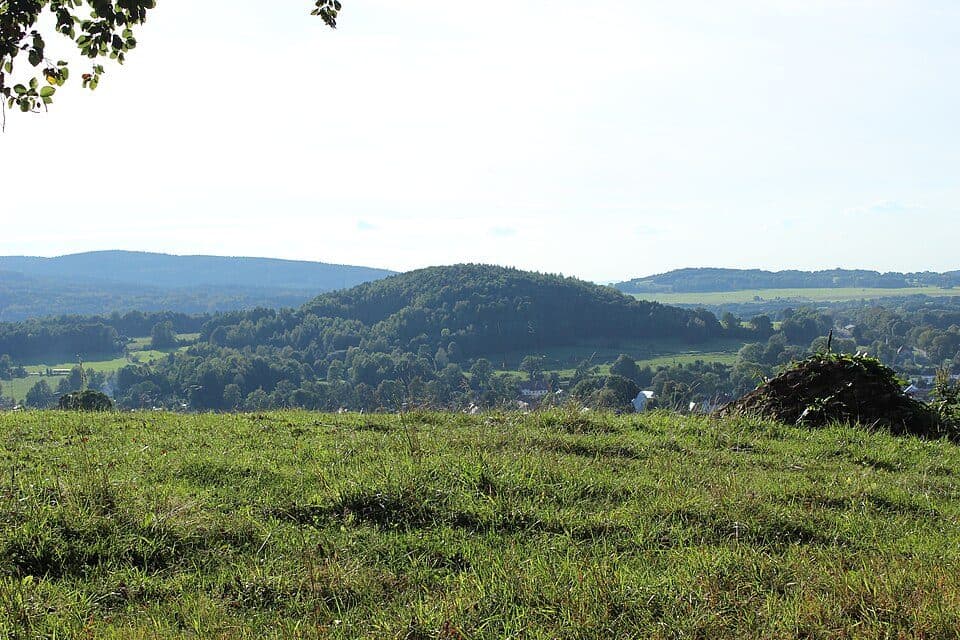
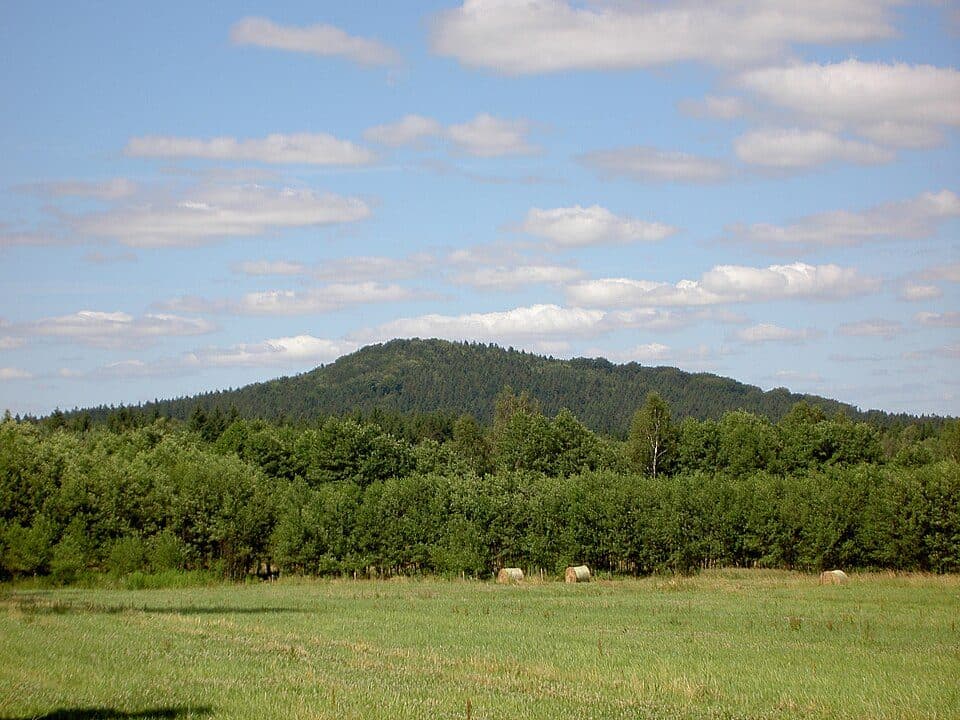
The rock is a remnant of an ancient lava flow that likely originated from the nearby Kodešův vrch, the remains of a volcano about 1.2 km away. The formation was uncovered by mining activity in the long-abandoned Gotha quarry. Today it is covered by a deciduous oak-hornbeam forest, home to rare plants including the martagon lily. The atmosphere here is quiet and almost intimate, especially lovely in spring when the forest floor blooms and in autumn when the fallen leaves highlight the geometric shapes of the columns.
How to get thereThe rock is named after Otakar Kodeš, a teacher from Frýdlant and member of the State Defence Guard, who was shot here in 1938 by a member of a Sudeten German unit - a poignant piece of history tied to this striking natural site.